DE | EN | FR

Digitorial® on the special exhibition

Hero Games

The exhibition

The seven missions

Der Heldenmythos

Die sieben Heldinnen und Helden

Das Orakel von Delphi

#herogamesgallery

Quiz

Your visit

The exhibition is interactive and designed as a game. It is suitable for adults of all ages. We will equip you with a badge and a headset. After that, your adventure can begin. We recommend the HERO GAMES for children 9 or older. The exhibition is only partially barrier-free; people who have issues with their hearing or vision will only be able to participate in the game to a limited extent.

The number of slots is limited. You should book your spot in advance and pay for your ticket at the museum ticket desk when you arrive.

Game Master

Interested in having a Game Master? Our Game Masters will motivate and look after you during your adventure and will answer any questions you may have about ancient mythology. Book your own personal Game Master for you or your group by calling +41 61 201 01 46 or book here.

Price: from CHF 200

Special offers

For best agers

Golden Heroes

For people who don’t think they’re too old for an adventure.
Suitable for people 60 or older

On the following Tuesdays from 2 p.m. to 4 p.m.: 30 Sept. 2025, 14 Oct. 2025, 11 Nov. 2025, 2 Dec. 2025, 27 Jan. 2026, 17 Feb. 2026, 24 Mar. 2026
CHF 34 per person, includes admission to the museum, support from a Game Master and coffee and cake

Reservation required: +41 61 267 01 60 or book here.

Groups

After-work Heroes

For teams of people who want to go on an adventure together.
Bookable for 10 or more people, prices valid for up to 20 people, prices for 21 or more people available on request.
Tues.–Fri. starting at 4:30 p.m.
From CHF 34 per person, includes admission to the museum, support from a Game Master and a snack and drink
From CHF 65 per person, includes admission to the museum, support from a Game Master, a snack and drink and a 3-course meal

Reservation required: +41 61 267 01 60 or book here.

WORKSHOP FOR SCHOOL GROUPS

Brave, bold and selfless

How heroic are we?
First, the pupils in the school group will complete all the heroic missions in the exhibition and discover the legend within them. After that, we will break up into groups and examine the question of who our heroes are, whether we need them and, if so, why, and how heroic we ourselves actually are. Each group will put together a zine in the form of a small brochure that will present the group’s views and reflections, and perhaps even short stories.

We will incorporate the pupils’ ideas directly into the HERO GAMES by displaying their zines in the exhibition and making them available to visitors.

2 hours, starting at the 4th primary level
Tues.–Fri. from 10 a.m. to 12 noon
Group size: max. of 25 participants
Prices: Schools in BS/BL cantons: free; others CHF 180.00

Registration: +41 61 267 01 40, Tues.–Fri. mornings, or write an email here.

Wichtig! Wenn du die Ausstellung mit deiner Klasse eigenständig oder mit einem Game Master (Führung) besuchen möchtest, sende uns deine Anfrage bitte über dieses form. 

Food and events

Bistro AMB

During the special exhibition, we will be adding dishes inspired by ancient heroes and heroines to the menu. You can look forward to everything from Heracles Vegetables to Medea’s Magical Cake – fortify yourself with powerful dishes and enjoy the fine flavours of Greece.

Book your table here.

Culture meets cuisine

Embark on a mythical journey, immerse yourself in faraway places and complete the most legendary missions of antiquity. Discover the hero or heroine in you and spend an epic Friday evening in the Antikenmuseum Basel.

First you will fortify yourself with a snack and a drink, then you will obtain your own personal hero status in the HERO GAMES and, finally, you will relax and enjoy a heroic meal in our Bistro AMB.

CHF 65, includes admission to the museum, support from a Game Master, a 3-course meal and a glass of prosecco or beer

You’ll find more information on our website. Only with a spot booked in advance: call +41 (0)61 267 01 46 or fill out this form here.

Your event at the Antikenmuseum Basel

Whether you’re planning a private celebration or corporate event – the event rooms at the Antikenmuseum offer the ideal location for special moments. Book today and see for yourself what our one-of-a-kind combination of culinary delights and unique atmosphere has to offer!

We’ll be happy to provide you with information and advice. Just call us on +41 61 267 01 60, or send us your request using this form here.

Our museum

Opening hours

Closed on Monday
Tuesday & Wednesday: 11 a.m.−5 p.m.
Thursday & Friday: 11 a.m.−10 p.m.
Saturday & Sunday: 10 a.m−4 p.m.

Opening hours on public holidays

Admission

Adults: CHF 22
Groups (4+ people): CHF 20
People under 20 years of age: CHF 9
People under 30 years of age in a full-time education: CHF 9
Children under the age of 13: Free
Holders of the Museums-PASS-Musées or the Swiss Museum Pass: free*

*Valid for individual admission only; not valid for packages and special anniversary offers that include admission.

Address

Antikenmuseum Basel und Sammlung Ludwig
St. Alban–Graben 5

CH-4010 Basel

+41 61 267 01 12
info (at) antikenmuseumbasel.ch
www.antikenmuseumbasel.ch

Newsletter

Subscribe to our newsletter (in German)

The

Hero Myth

The ancient Greek myths are stories that are set in a mythical bygone era and have been handed down from generation to generation. They are stories about the origins of the world, about the genesis of the gods and goddesses and the adventures of the great heroes and heroines. The myths are fictional, but in antiquity they were understood as real events that had happened in the past. Indeed, the heroes and heroines were idealised figures who people could easily identify with. They served as role models – examples of the right way to behave. Like all human beings, however, they also had weaknesses and flaws which made them human and easy to relate to, and which also served as a deterrent to discourage bad behaviour.

The hero as a role model

Heracles was the embodiment of the ideal warrior who used his strength to maintain order in the world. Alexander the Great revered Heracles as a mythical forebear and role model, and liked to present himself as Heracles wearing the lion skin.

Bust of Alexander the Great with lion skin, marble, 3rd century BC, New York, Metropolitan Museum of Art, loan
Image: Lanmas / Alamy Stock Foto

The historical core of the myth

The Greek heroic myths include stories about the deeds of individual heroes. Perseus, for example, travelled to the edge of the world and beheaded the terrifying Medusa, serving as a role model for young men going to war. Theseus fought the Minotaur in the Labyrinth, which could perhaps be interpreted as a metaphor for the inner conflicts every human being faces.
Other myths feature heroes and heroines from all over Greece who come together to fight the Trojan War, join the Argonauts or hunt the Calydonian Boar.
The myths always refer to a known reality and explore fundamental social questions and values. They serve as a beacon in the turbulent sea of life – a guide to help people figure out how to act in difficult situations.

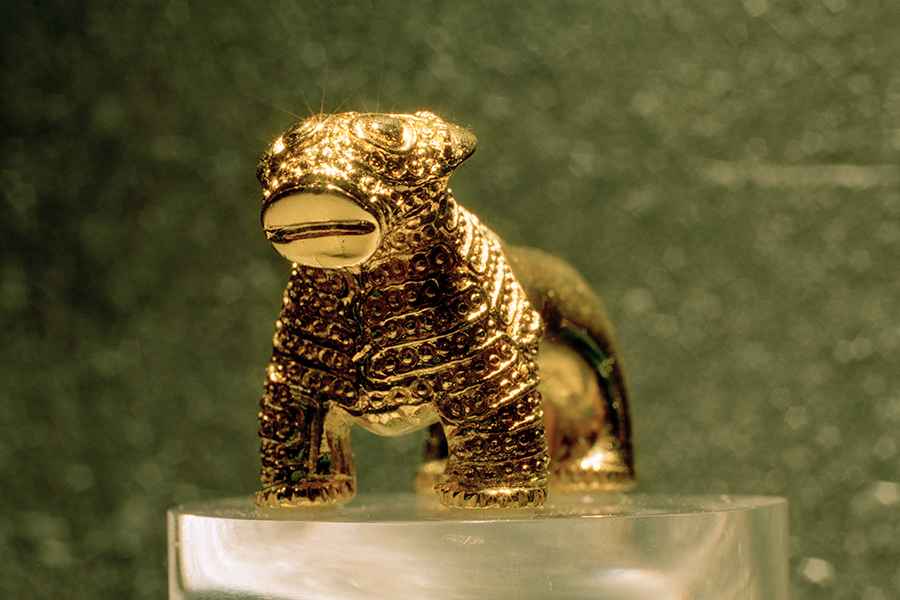
The myth of the Argonauts, who sail across the Black Sea to Colchis in search of the Golden Fleece, has a basis in historical fact. The story reflects a highly developed civilisation in what is now western Georgia, a society that prospered from the mining and processing of precious metals, particularly gold, and which probably started trading with Greece early on.

In the 3rd century BC, early Bronze Age cultures were already mining gold in the Caucasus and turning it into artistic objects. Small lion from Kurgan No. 2 in Tsnori, gold, 2nd half of the 3rd century BC, Tbilisi, Georgian National Museum, Inv. 140–975: 1
Image: akg-images

No "right" or "wrong"

The Greek myths have been handed down over the course of thousands of years, and are extremely versatile and flexible. There is no “right or wrong”. They can be adapted as necessary to reflect the zeitgeist, a current event or a specific place – and they can be endlessly retold. This means that over time many different versions of the various myths have emerged. For the HERO GAME, we have drawn mainly on the canonical – i.e. the best-known – versions.

There are several versions of the story of Odysseus’ death. In one of them he is killed by Telemachus, his son by his wife, Penelope, and in another he is killed by his illegitimate son Telegonus. In one version he is killed with a spear tipped with the venom of a sea creature; in another he is turned into a horse. The oldest version of the myth has him living happy and content well into old age.

Bust of Odysseus from the Polyphemos Group in Sperlonga, marble, 1st century AD (?), Sperlonga, Museo Archeologico Nazionale (original), plaster cast from Skulpturhalle Basel, Inv. SH 1262

The myth today

The Greek myths are still being revised and retold in new interpretations and from new perspectives to this day. Myths are stories about life, about its ups and downs, about fundamental human questions. This is why they have lost none of their relevance and fascination despite their age. We find Greek myths everywhere – in literature, in the visual arts, in music, film, comic books and even body art.

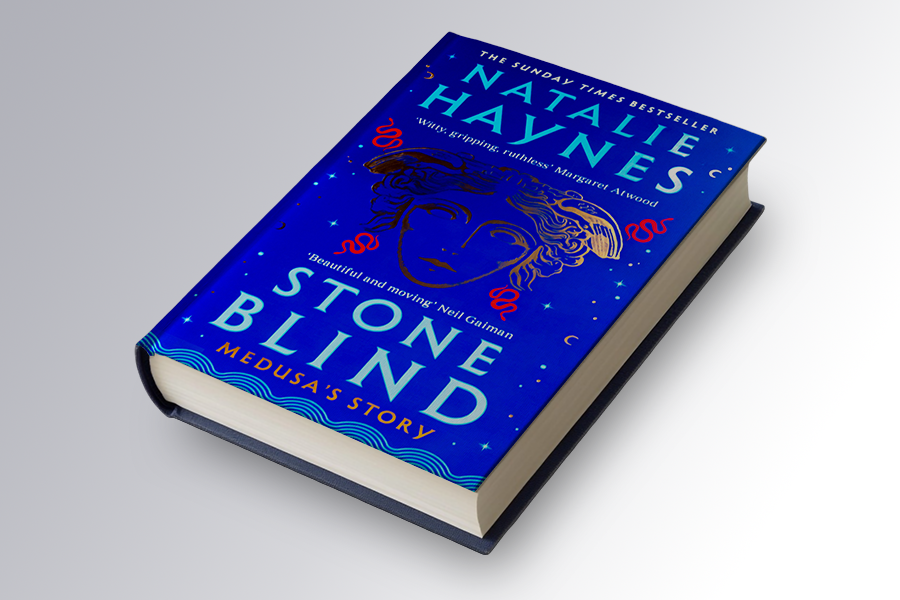
The myth in literature: In her novel Stone Blind, Natalie Haynes tells the story of Perseus and Medusa from a female perspective.

Natalie Haynes, Stone Blind – Medusa's Story (2022)
Image: booksR / Alamy Stock Foto


The myth in the visual arts

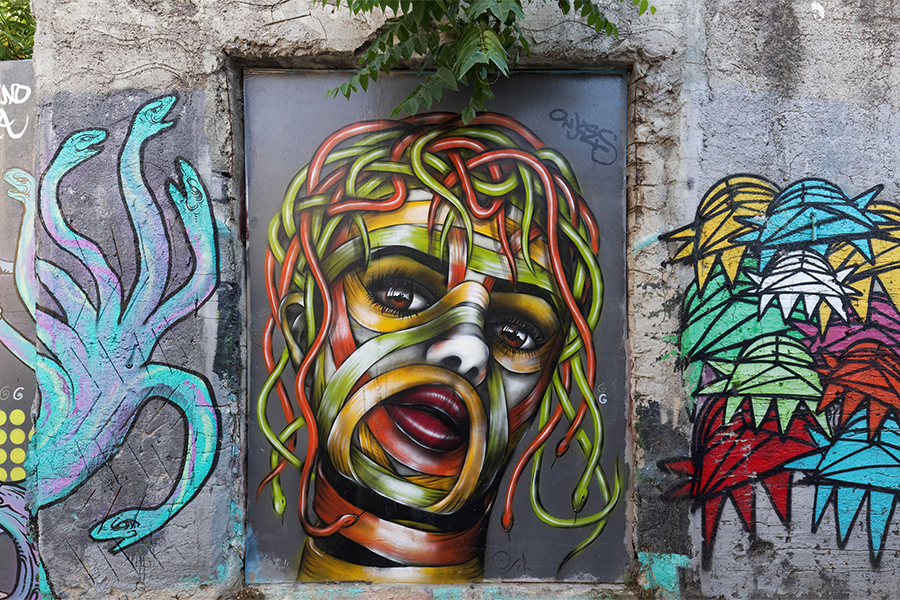
Auch in der bildenden Kunst ist der griechische Mythos gegenwertig, in der Malerei, der Plastik oder wie hier als Street Art Kunstwerk.

A modern version of Medusa. Street art in the Anafiotika neighbourhood in Athens.
Image: imageBROKER.com / Alamy Stock Foto

The myth in the movie

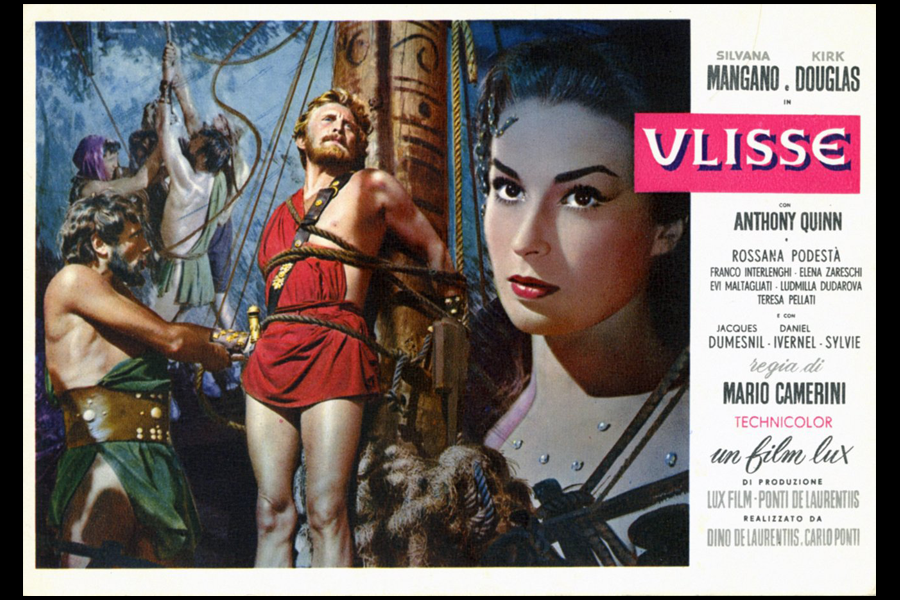
The myth of Odysseus and his wanderings has been adapted for film and television numerous times.

Movie poster for Ulisse by Mario Camerini from 1954
Image: Photo 12 / Alamy

The myth in comics

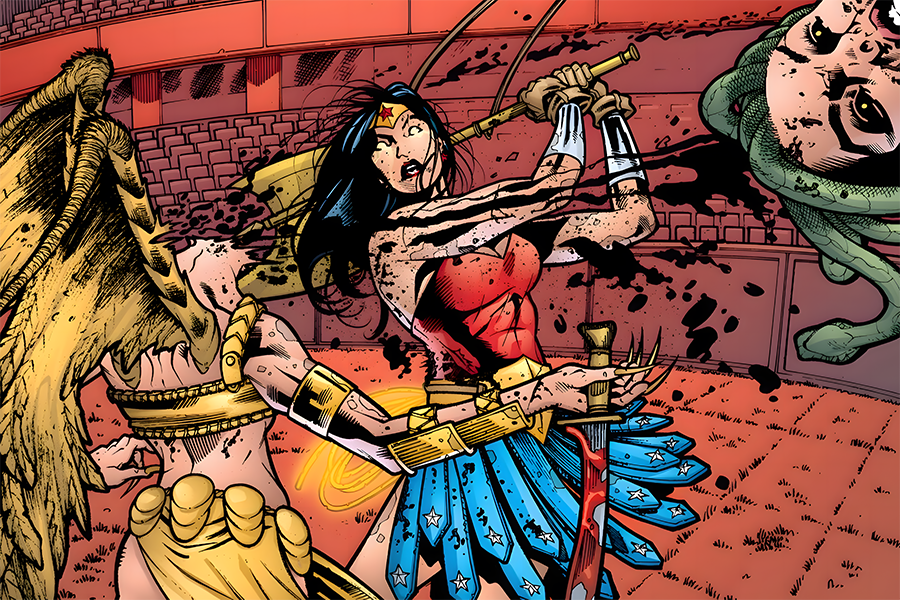
The comic-book Amazon Diana Prince, a.k.a. Wonder Woman, is a daughter of Zeus and owes her incredible superpowers to the Greek gods and goddesses. The Greek myths are an integral part of her stories. During an exhausting battle with Medusa, Wonder Woman blinded herself so as to be safe from Medusa’s gaze. Now she cuts off the demon’s head.

Image: Greg Rucka, Drew Johnson, Ray Snyder, Wonder Woman 1987, #210 (DC Comics January 2005) 21.3 © DC Comics 2016

The myth in music

In The Labyrinth Song by Israeli musician Asaf Avidan, released in 2015, the Labyrinth is a metaphor for the abyss of the human psyche in which the hero becomes trapped and lost.

Asaf Avidan, The Labyrinth Song, 2015
Video: Youtube

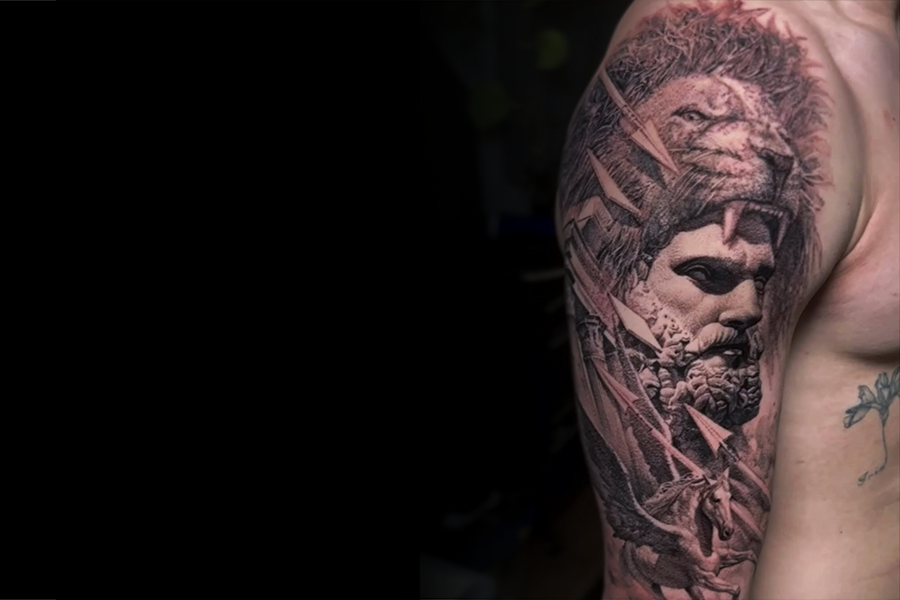
The myth in body art

A Heracles tattoo is a symbol of one’s own strength and the ability to overcome personal challenges in life.

Image: InkStitute