The exhibition
Hero Games
Discover the Legend Within You.
An interactive exhibition
14 September 2025 – 29 March 2026
at the Antikenmuseum Basel
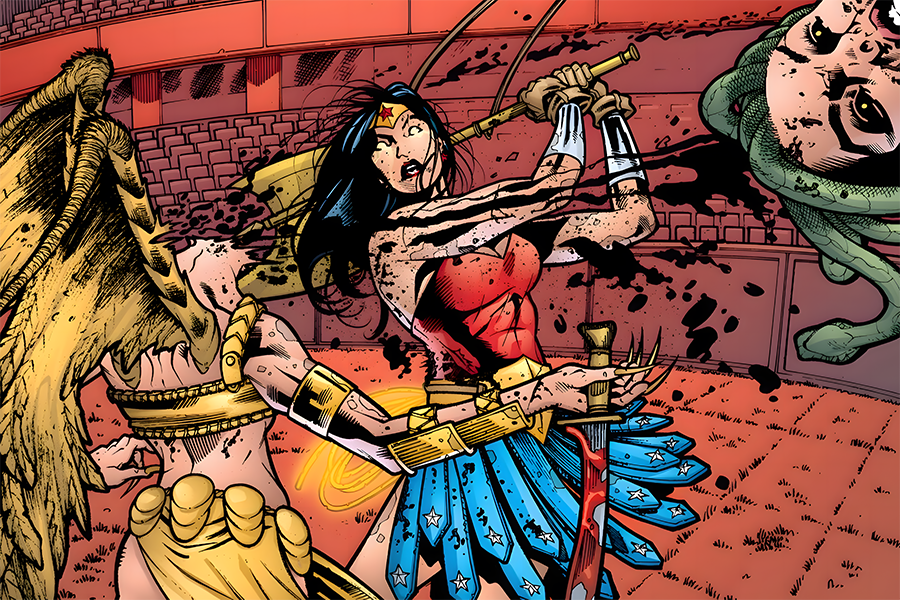
This exhibition takes the form of a game in which you are the main character who embarks on an adventurous journey. As you proceed, you will immerse yourself in mythical worlds and complete the most famous missions of the greatest heroes and heroines in antiquity. You will meet the terrifying Medusa at the edge of the world, bring Cerberus back from the Underworld and face the Minotaur in its Labyrinth.
Seven different missions await you in the form of both analogue and digital games. Put your various skills to the test as you work to earn your own personal hero status.
Be part of this interactive cultural experience, see what it feels like to be a hero and enjoy an epic adventure at the Antikenmuseum Basel.
The exhibition is made possible by:

“It is I, the invincible Athena, who speaks to you! I who hold fame and victory in my divine hands. I, goddess of wisdom and war, daughter of Zeus. I welcome you to the Hero Game! I have hurried down from Mount Olympus to assist you.”


The seven
Missions
Thousands of years ago, great heroes and heroines drew on their courage, strength and intelligence and sometimes magic to complete their missions. We still remember their names today – their heroic deeds have made them immortal.
But now it’s your turn.
The era of your own heroic deeds has arrived. You will be accompanied on your mission by your patron goddess, Athena. She will be by your side throughout, telling you what to do. Your journey will take you to the Oracle of Apollo in Delphi, where the Oracle will make a prophecy about your heroic future.


“I loved myths as a child the way some kids loved dinosaurs: they were larger than life and very old, but also, they helped me understand my place in the world.”
Madeline Miller

The
Hero Myth
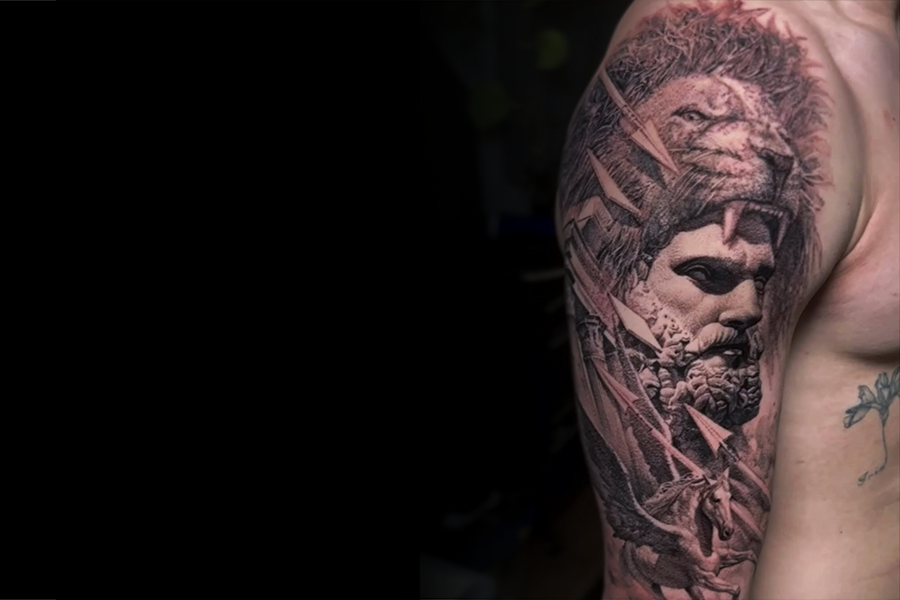
The ancient Greek myths are stories that are set in a mythical bygone era and have been handed down from generation to generation. They are stories about the origins of the world, about the genesis of the gods and goddesses and the adventures of the great heroes and heroines. The myths are fictional, but in antiquity they were understood as real events that had happened in the past. Indeed, the heroes and heroines were idealised figures who people could easily identify with. They served as role models – examples of the right way to behave. Like all human beings, however, they also had weaknesses and flaws which made them human and easy to relate to, and which also served as a deterrent to discourage bad behaviour.

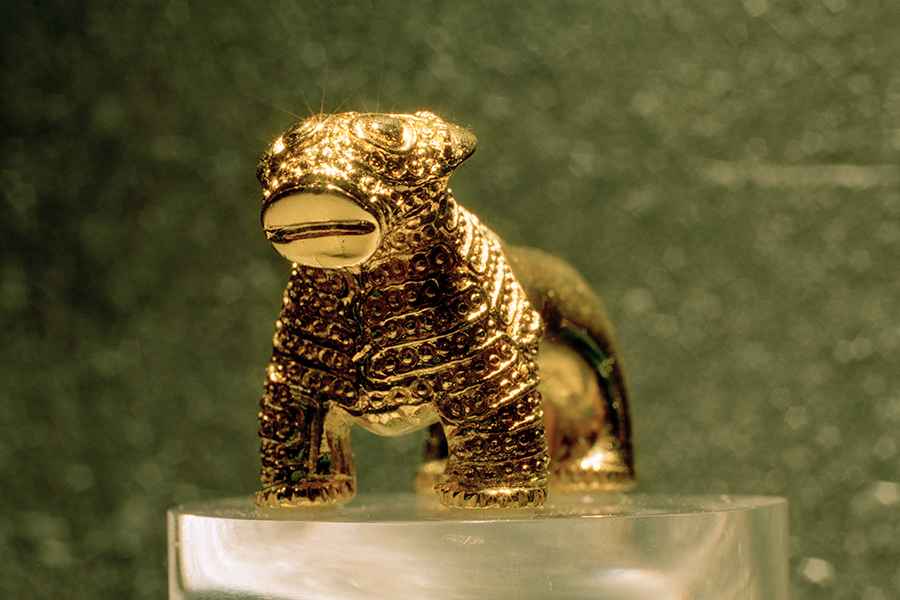
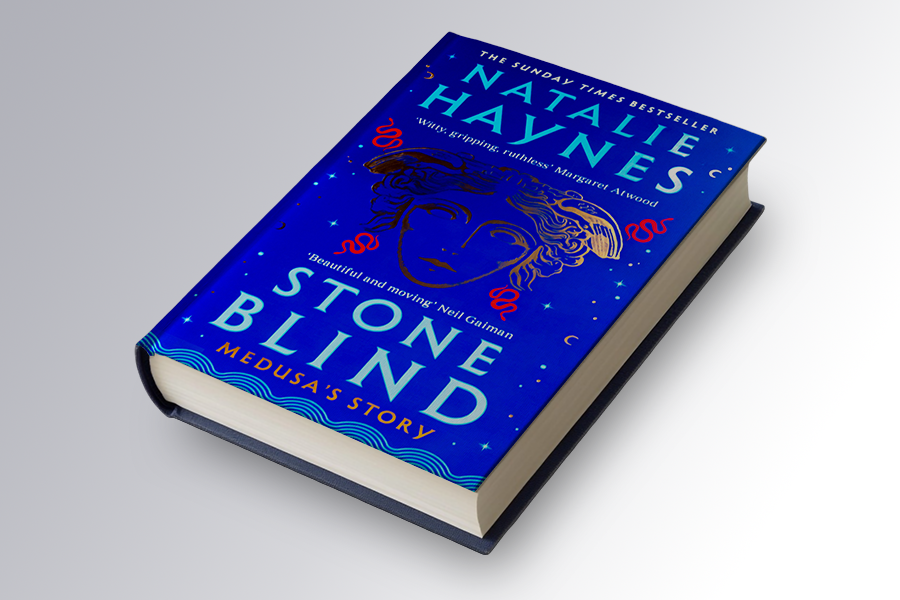
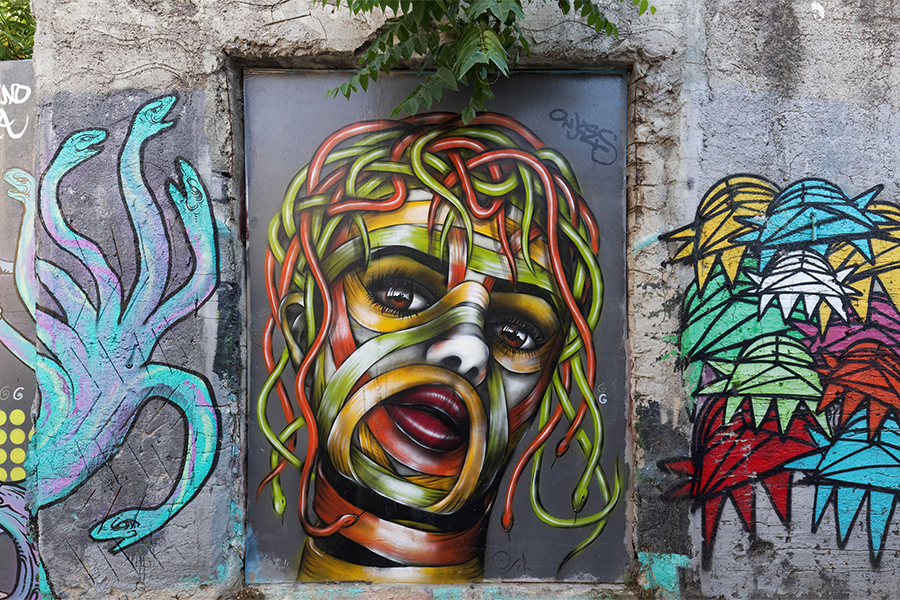
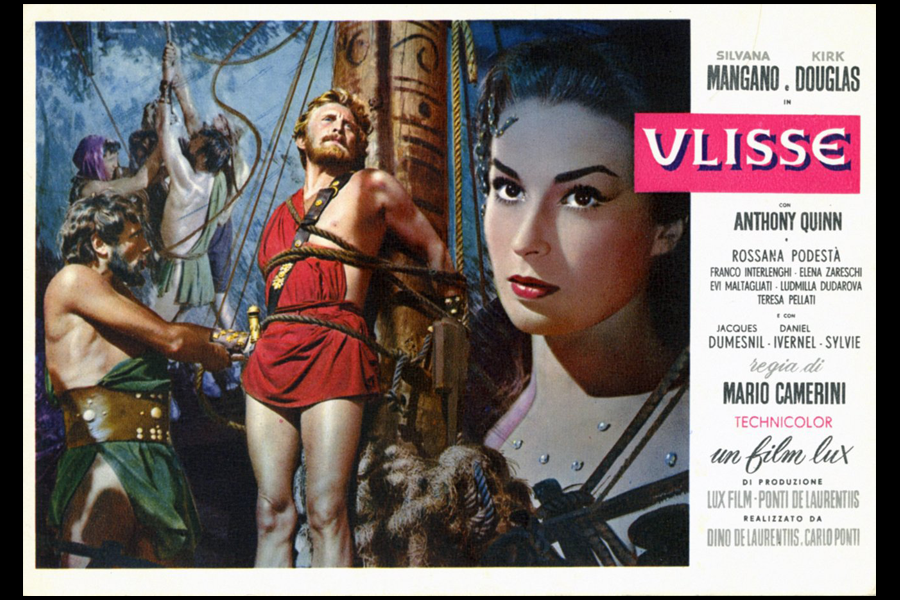

The seven
Hero Myths
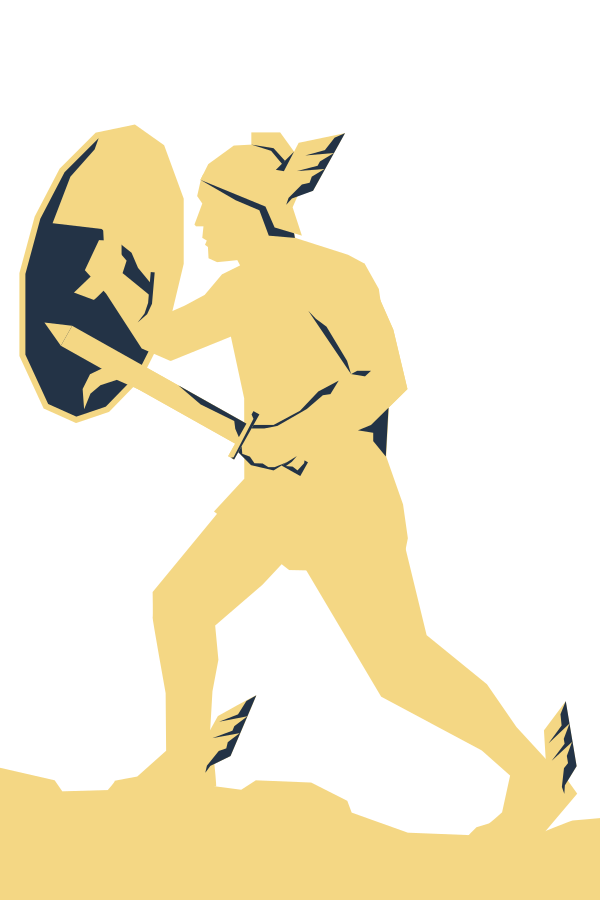
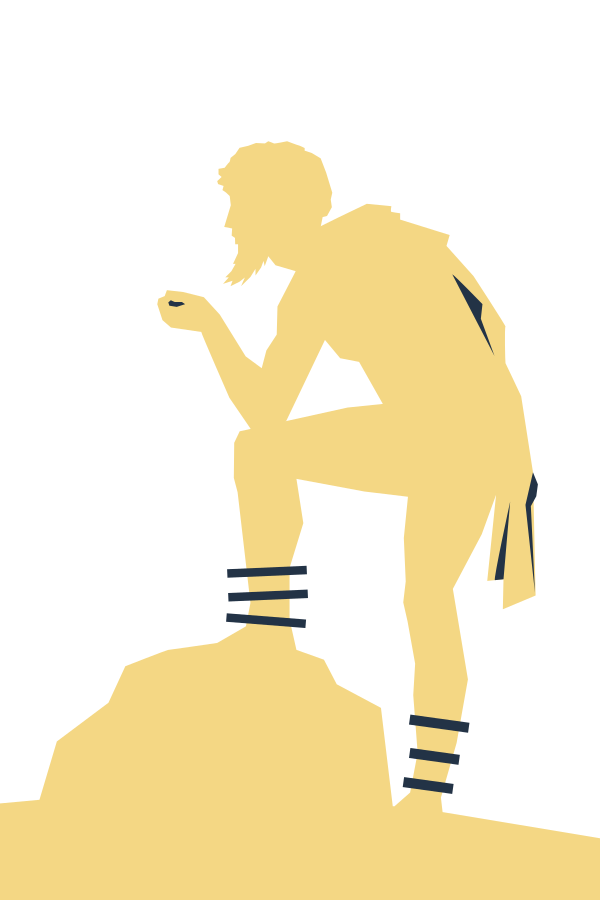
In the HERO GAME you will immerse yourself in seven different worlds and complete the most glorious missions of the most famous heroes and heroines in antiquity. Here we introduce these heroes and heroines, and their adventures, and summarise each of their stories in seven pictures.



The oracle of
Delphi
The Oracle of Delphi played an important role in antiquity, not only in real life but also in the heroic myths. Prophecies determined the fates of heroes and heroines. Our visitors will also arrive in Delphi at the end of their heroic journey, and will then receive their own personal oracle in the Temple of Apollo.

Image: Arthur – stock.adobe.com
Delphi – the navel of the world
As legend would have it, Zeus, the father of the gods, once launched two eagles from both ends of the earth, one flying east and one flying west, in order to determine the midpoint of the world. The eagles met in Delphi, thus identifying the oracle site as the centre of the world. The point where the mythical eagles met was marked by a sacred stone, the so-called omphalos (“navel”). It stood in the Temple of Apollo and marked Delphi as the spiritual and geographical centre of the world.
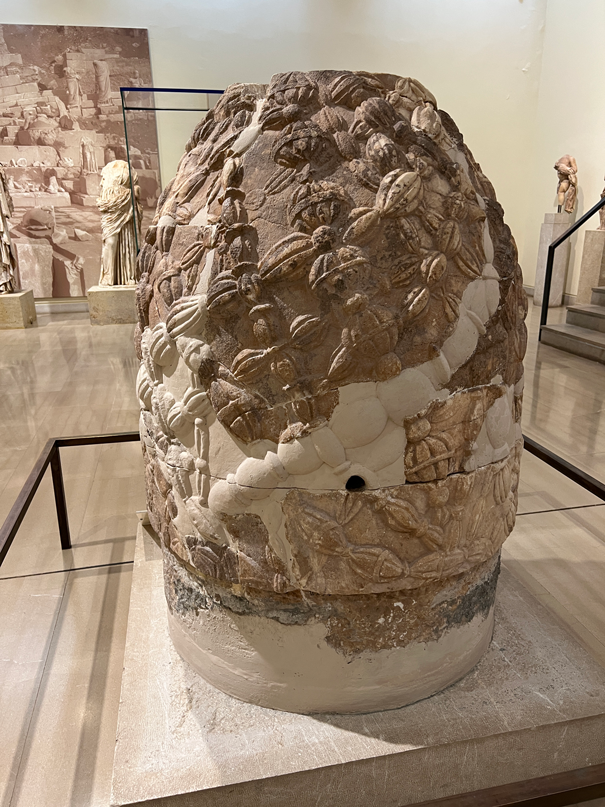
This omphalos is based on the original sacred stone, which was located in the inner sanctum of the Temple of Apollo and was covered with a woollen net fabric. Here the woollen fabric is recreated as a relief.
Omphalos from Delphi, marble, 4th century BC (?), Delphi, Archaeological Museum
Image: Chabe01/ Wikimedia Commons : Omphalos, Delphes Omphalos, Delphi
From the earth to the light – the mythical founding of the Oracle of Delphi
Delphi is located in the region of Phocis (modern-day Fokida) in central Greece, on a steep slope at the foot of Mount Parnassus above the Gulf of Corinth. The earth is very seismically active here and many springs issue from its depths. Earthquakes and landslides are not uncommon.
It is as if the power of the earth and the power of the light are both manifested in Delphi. This potent place has made a deep impression on people ever since ancient times. It was once chosen as the location for worshipping the ancestral mother of all life – the powerful earth goddess Gaia. She is said to have been the first to have presided over the Delphic oracle.
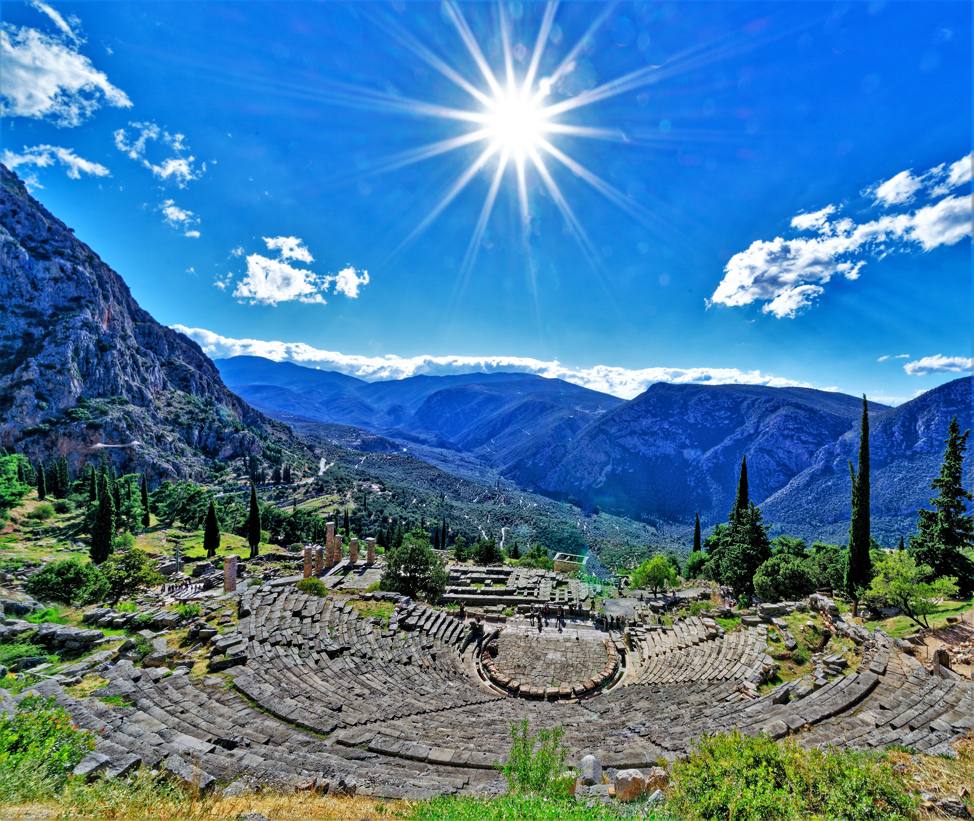
Image: Holger Uwe Schmitt/ Wikimedia Commons: Delphi
Later, Apollo, the radiant god of light, took over Mother Earth’s sanctuary. According to one version of the myth, Apollo killed the dragon Python (Gaia’s son, who had been the guardian of his mother’s oracle) and installed himself as master of Delphi.
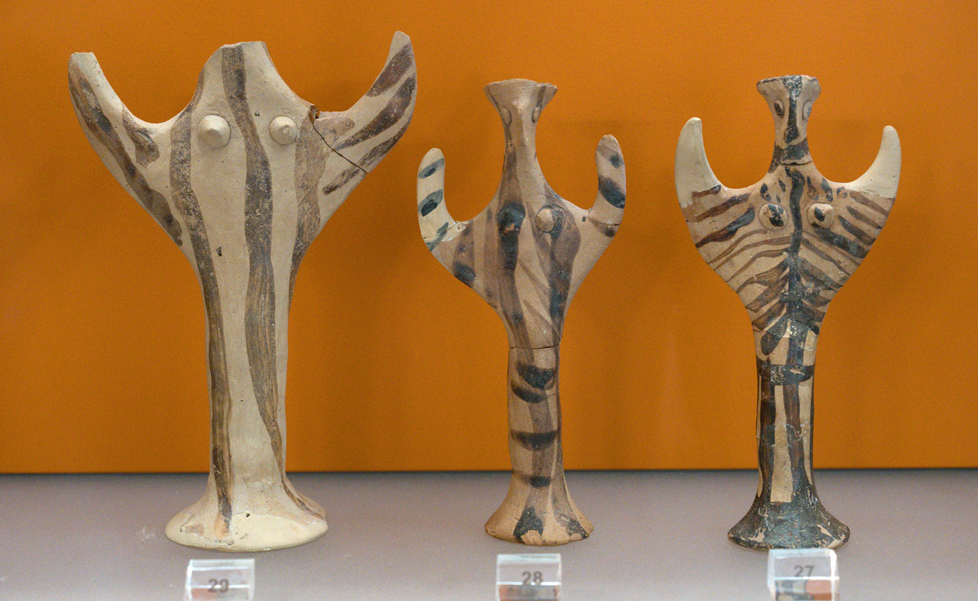
Archaeological evidence of people worshipping an earth goddess at Delphi (in the form of female idols) dates back to the 13th century BC.
Mycenaean idols from Delphi, clay, painted, 13th century BC, Delphi, Archaeological Museum
Image: Zde/Wikimedia Commons: Idole, Delphi
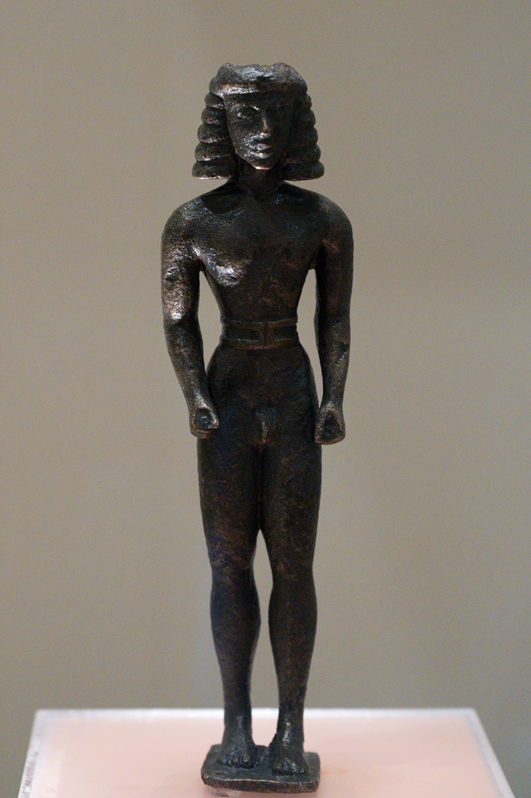
Finds of male statuettes, thought to depict Apollo, serve as evidence that Delphi became a shrine to him from around 800 BC onwards.
Statuette of Apollo from Delphi, bronze, around 620 BC, Delphi, Archaeological Museum
Image: Zde/Wikimedia Commons: Apollo, Delphi
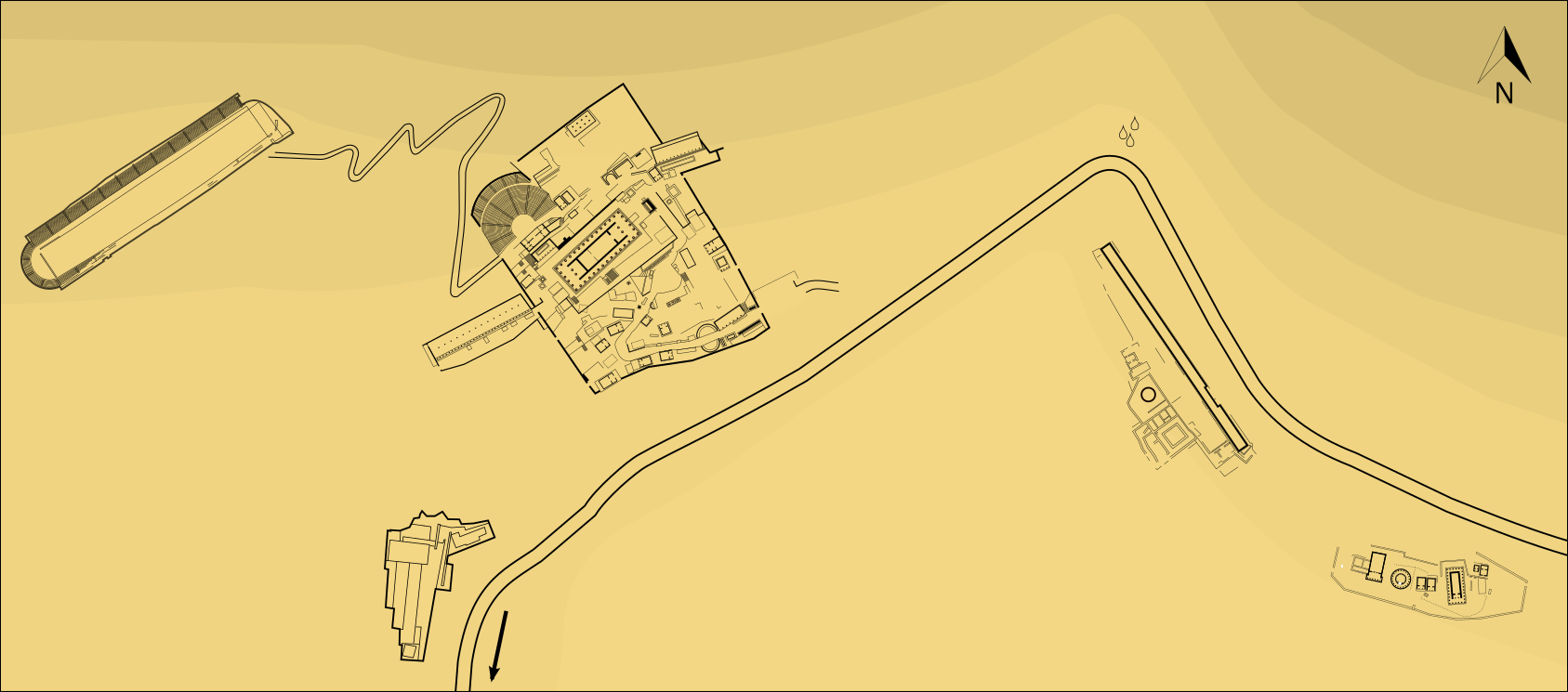


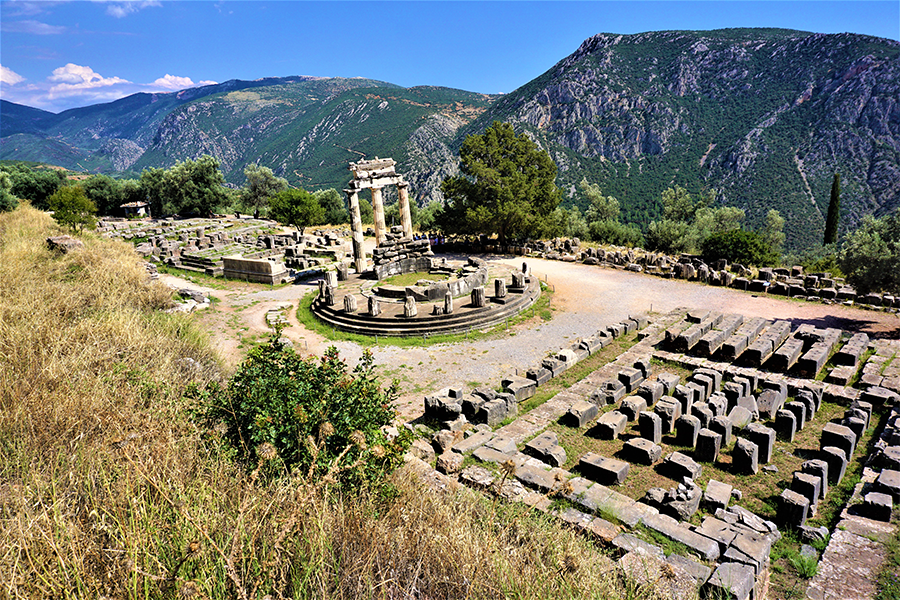
Heiligtum der Athena Pronaia
The circular temple (tholos) is Delphi’s most famous building and a popular site for taking photos. It formed part of the Sanctuary of Athena Pronaia (“the one before the temple”) on the lower terrace. In Delphi, Athena likely played the role of a guardian who watched over the sanctuary of her half-brother Apollo on the upper terrace.
Image: Joyofmuseums/ Wikimedia Commons: Athena-Heiligtum, Delphi
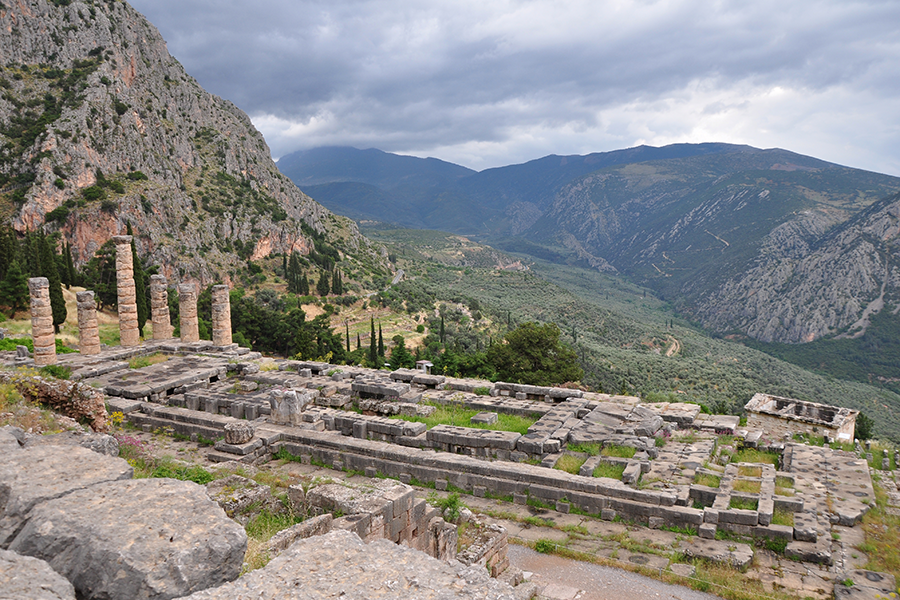
Tempel des Apollon
Enthroned at the centre of the sanctuary was the Temple of Apollo. The inner sanctum of the temple (the adyton) was where the oracles were pronounced.
Some of the maxims of the “Seven Sages” were inscribed in the vestibule of the temple. These were short, pithy sayings that great philosophers are said to have dedicated to Apollo. The most famous maxim is “know thyself”.
Image: Helen Simonsson/Wikimedia Commons: Apollon Tempel, Delphi
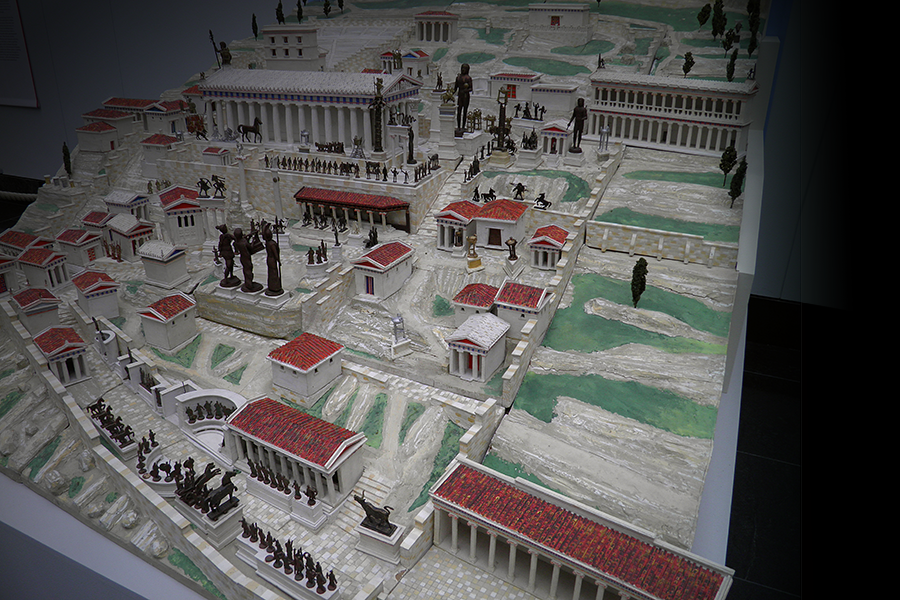
Heiligtum des Apollon
In the Sanctuary of Apollo, the street was lined with porticoes and treasuries that housed valuable votive offerings to Apollo. There were also dozens of monumental votive offerings and victory monuments erected to the glory of individuals and entire cities.
Bild: Carole Raddato/Wikimedia Commons: Modell Delphi, München
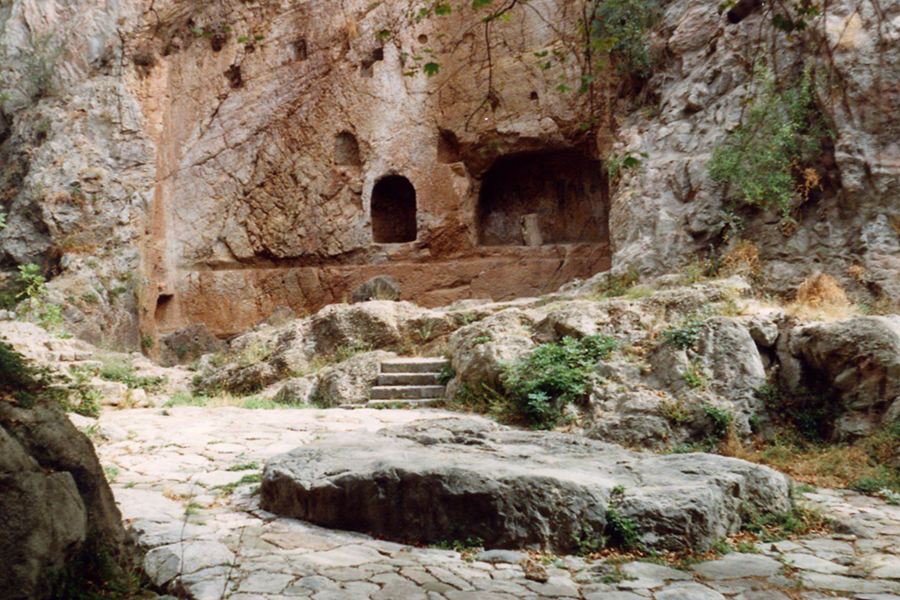
Kastalia-Quelle
The Pythia, Apollo’s mouthpiece, bathed in the water of the Castalian Spring before pronouncing her oracles. People coming to consult the oracle also refreshed and cleansed themselves here before making their way to the Temple of Apollo.
Image: Stefan Volk/ Wikimedia Commons: Kastalische Quelle, Delphi
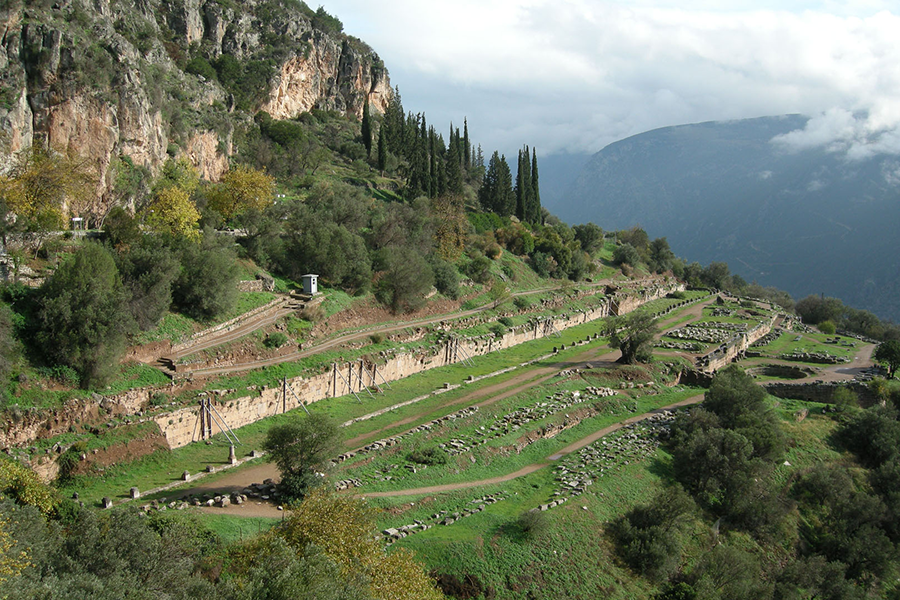
Gymnasion
At the gymnasium, athletes would train for the events at the Pythian Games. However, the gymnasium was also a place of intellectual education. There were race courses, a wrestling school, a bath house, changing rooms and lecture rooms. The round swimming pool was fed with cool water from the Castalian Spring and was the perfect place to cool off.
Image: Luarvick/Wikimedia Commons: Gymnasion, Delphi
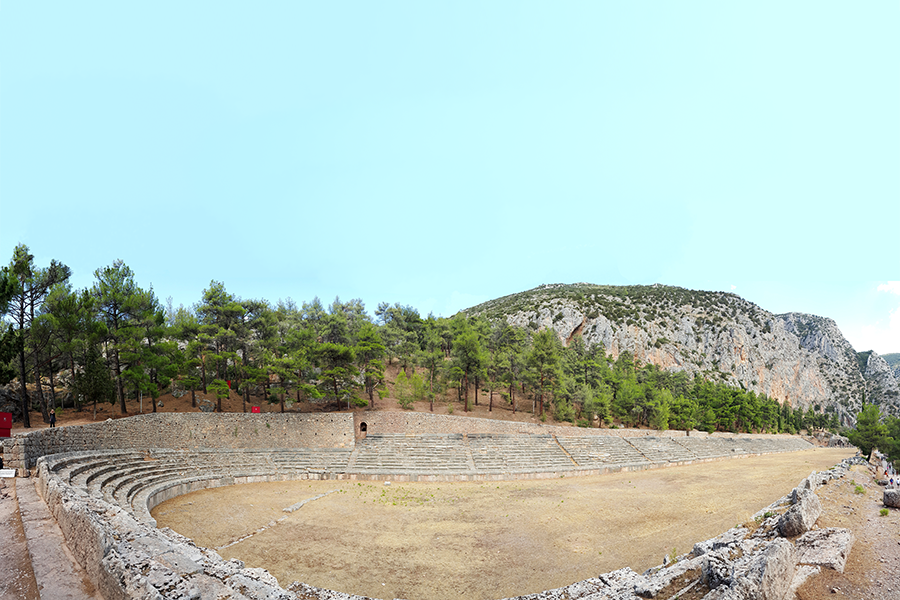
Stadion
The Pythian Games, held in honour of Apollo, took place in the stadium. The victors were rewarded with a wreath of laurel – the sacred plant of Apollo – and eternal glory. They also earned the right to erect a victory statue of themselves in the sacred precinct.
Bild: Vgargan/ Wikimedia Commons: Stadion, Delphi
Apollo
God of light and prophecy
Apollo was an eternally youthful god with many facets. He was the god of healing, music and the arts. His epithet Phoebus (meaning “shining one”) identifies him as the god of pure, divine light. As the god of prophecy, he was master of the Oracle of Delphi. He addressed personal problems as well as religious and political questions, and provided advice in all kinds of situations. His answers, however, were always ambiguous. As Apollo Loxias, “the ambiguous one”, he never explained, only suggested and indicated. The questioners had to interpret the oracle for themselves.
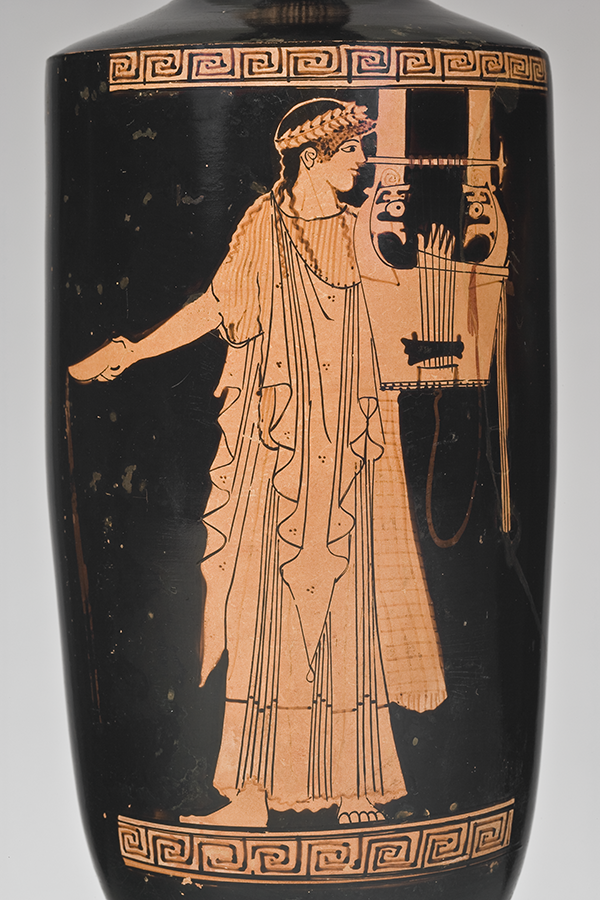
As the god of music as well, Apollo is a gifted kithara player. Here he is shown with this ancient stringed instrument in his left hand and a sacrificial bowl in his right. His long curly hair is crowned with a wreath of laurel, his sacred plant.
Anointing oil flask (lekythos) from Athens, clay, around 480 BC, Antikenmuseum Basel und Sammlung Ludwig, Inv. Lu 41
When Croesus, king of Lydia, asked the oracle whether or not he should go to war against the Persians,
the answer was:
«If you cross the Halys,
you will destroy a great empire.»
Croesus was pleased, assuming that the great empire he was going to destroy was Persia. He crossed the River Halys, which formed the border between Lydia and Persia, and suffered a devastating defeat at the hands of the Persians. He had misinterpreted the oracle: it was his own empire that he destroyed by crossing the Halys.
The Pythia
Apollo’s mouthpiece
“The woman of Delphi sits on the sacred tripod,
and sings out to the Hellenes
whatever Apollo cries to her.”
Euripides, Ion 91–93, translated by Robert Potter
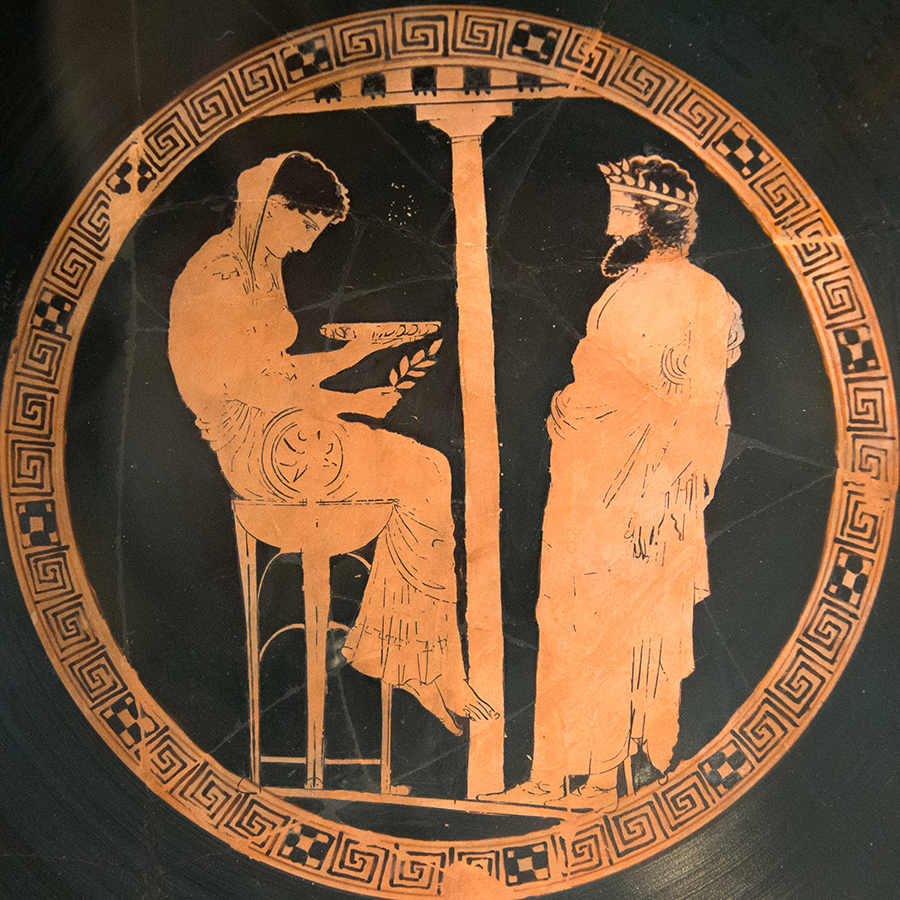
The Pythia sits on a tripod in the Temple of Apollo. In one hand she holds a bowl, in the other a laurel branch. In front of her, a bearded man waits to receive his oracle.
The name inscriptions place the scene in the realm of myth: the Titan Themis (who according to one version of the myth was her mother Gaia’s successor and Apollo’s predecessor) pronounces an oracle for Aegeus, the legendary king of Athens, who has come to consult the Pythia about his desire for a male heir.
Drinking bowl (kylix) from Athens, clay, around 440 BC, Berlin, Staatliche Museen, Antikensammlung, Inv. F 2538
Image: Zde/Wikimedia Commons: Pythia, Berlin
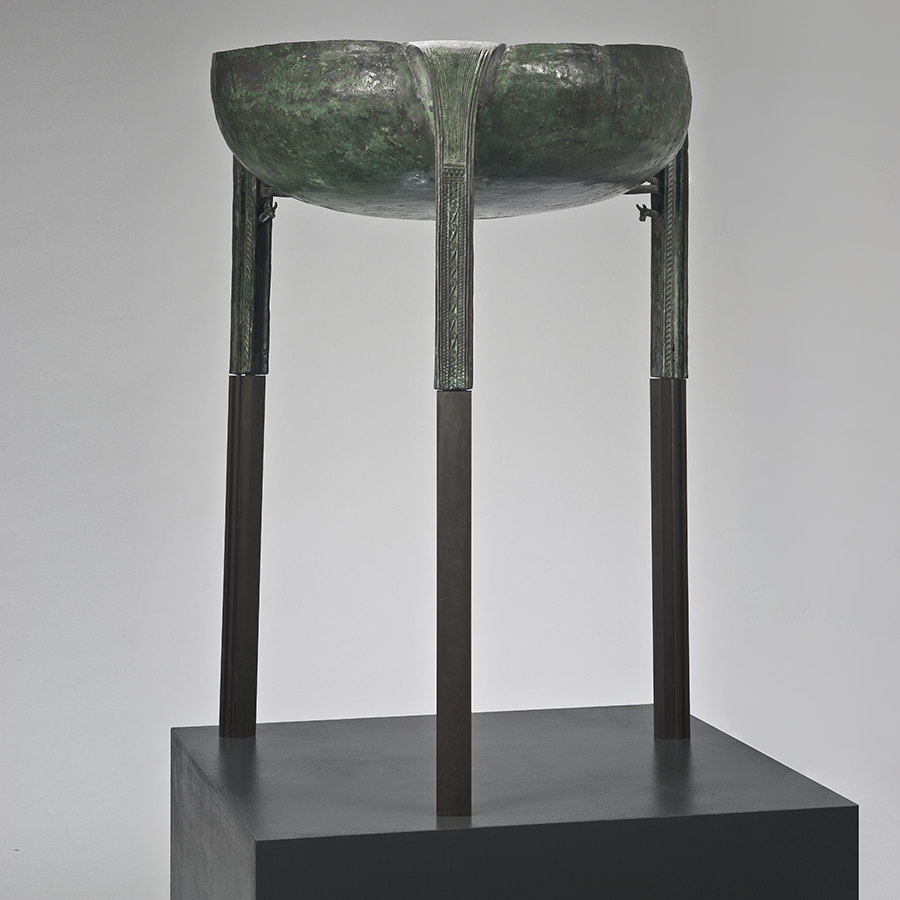
The Pythia sat on a tripod vessel with a lid when she pronounced her oracles. This was how the tripod became the symbol of Apollo’s art of prophecy.
Tripod from Corinth (?), bronze, around 750 BC, Antikenmuseum Basel und Sammlung Ludwig, Inv. BS 554
The Pythia was Apollo’s prophetess – he spoke to people through her. Her name is derived from “Pytho”, the old name for Delphi. The Pythia was selected from among the women of Delphi and remained in her role as “the voice in the centre of the world” for the rest of her life. Only a few Pythias appear in the historical record.
How the oracle operated
We do not know exactly how the Oracle of Delphi operated. Many ancient written sources mention the oracle, but there is no coherent account of the ritual involved. Was the process such common knowledge among the people in antiquity that the ancient authors did not feel the need to describe it? Or were they reluctant to write about divine secrets? We cannot know. But we do have a vague idea of what the Delphic oracle ritual might have entailed.
Before pronouncing an oracle, the Pythia would take a ritual bath in the sacred Castalian Spring, while priests sacrificed a goat in order to ascertain whether Apollo was ready to communicate. If the signs were favourable, the Pythia would enter the temple. In the inner sanctum, the adyton, she would sit on a tripod vessel, drink inspiring water and chew on laurel leaves. Then she would fall into a prophetic trance (in Greek mania) and Apollo would come to her. The god spoke through her, and the priests wrote down the prophecy she uttered.
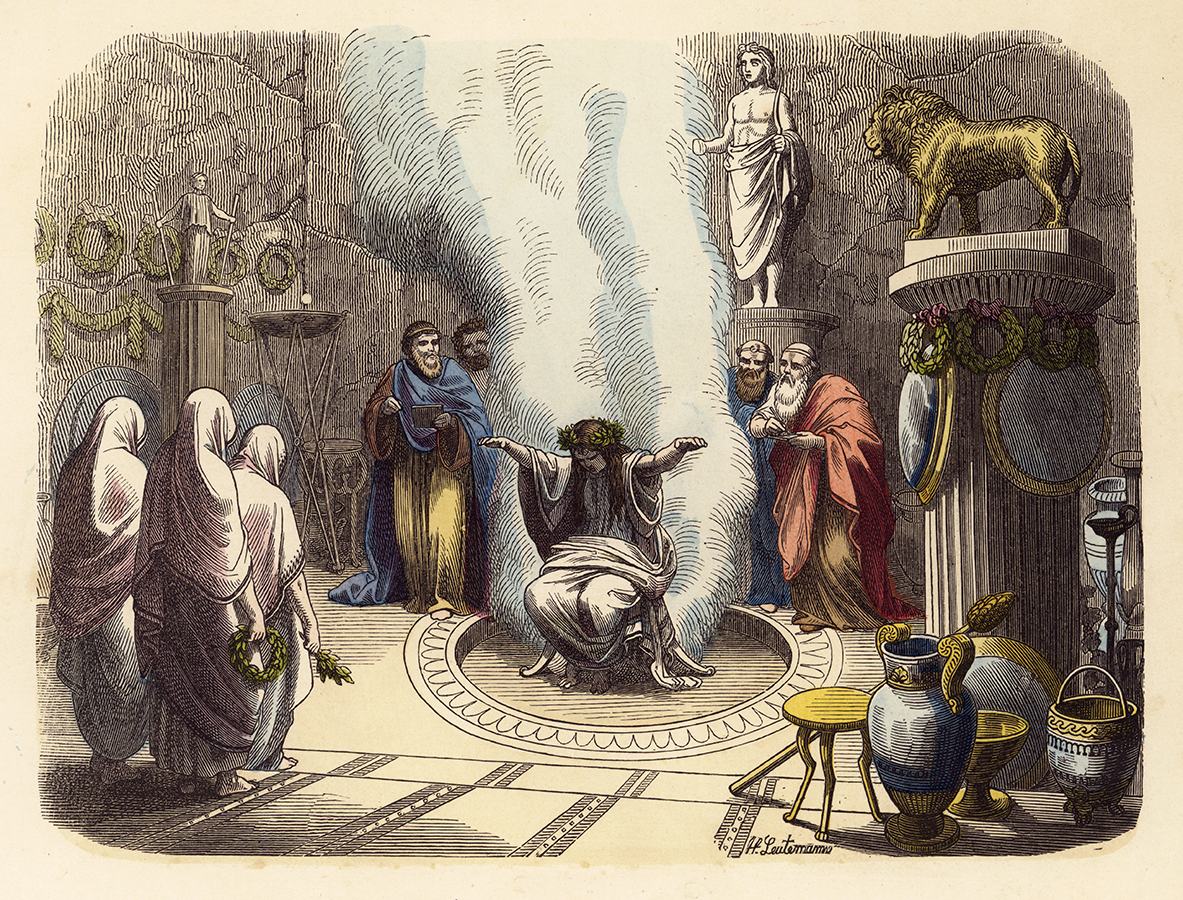
The Pythia, priests and persons consulting the oracle in the inner sanctum of the Temple of Apollo.
Colourised woodcut based on a drawing by Heinrich Leutemann, 1865
Münchener Bilderbogen: Bilder aus dem Alterthume VI, no. 359. Berlin, Sammlung Archiv für Kunst und Geschichte
Image: akg-images
People wishing to consult the oracle also had to have a ritual wash in the spring first. After that, they would join the queue outside the temple, perform some sacrificial rituals, pay an oracle fee and wait for their turn to enter the adyton and ask the Pythia their question.
Durch welche Mittel sich die Pythia in ihren Trancezustand versetzte, ist das umstrittenste Rätsel von Delphi. Schriftquellen berichten von einer mysteriösen Erdausdünstung, einem süsslich duftenden Pneuma, das prophetische Kraft besessen haben soll. Gab es wirklich Dämpfe, die unter dem Tempel der Erde entwichen? Oder handelte es sich um einen übernatürlichen «Orakelatem»? Hat die Pythia bewusstseinsverändernde Drogen genommen oder spirituelle Praktiken angewendet, um sich selbst in Trance zu versetzen?
Neither the ancient sources nor modern archaeological or geographical research can give us a definitive answer.


Become part of our heroes gallery!
After visiting the exhibition, your defeated opponents await you at the selfie wall. Take a photo, share it on Instagram with
#HEROGAMESGALLERY
and become part of our digital hero gallery.
Here you will find everyone who had the courage to take on the glorious missions.